
Key takeaways
- In England, a new front garden driveway over 5 square metres needs planning permission unless it uses permeable surfacing or drains to a planted area (Planning Portal).
- Block paving suits most homes for durability and looks, while gravel and resin give the easiest route to permeable, planning-exempt drives.
- Paving over front gardens has risen sharply, with around half of London's front gardens now paved, so drainage planning matters more than ever.
- A well-built driveway improves parking, kerb appeal and everyday access, so match the surface to your budget, soil and how you use the space.
A new front garden driveway comes down to three decisions: the surface material, the drainage, and who lays it. Get those right and you gain off-street parking, a tidier frontage and years of low-maintenance use. This guide walks through the main surfacing options, what each one costs you in upkeep, and the UK planning rules that decide whether you need permission at all.
At AAS Group, we build driveways across Northampton and the surrounding villages, so the advice below reflects what actually holds up on local soils and weather.
Do You Need Planning Permission for a New Driveway?
In England, you don't need planning permission for a front garden driveway of any size if it uses a permeable surface, or if rainwater drains to a lawn or border instead of running onto the road. Permission is only required when you cover more than five square metres with a traditional impermeable surface that sends water straight to the drains (Planning Portal, 2026).
This rule exists because hard, sealed surfaces push rainwater into the drainage network instead of letting it soak away. For most front gardens, the simplest route is to choose a permeable surface or plan the drainage so water flows to a planted area. That keeps you within permitted development and avoids a planning application.
A few practical points:
- The five square metre threshold applies to houses, not flats or maisonettes.
- Permeable options include gravel, porous asphalt and permeable block paving.
- Directing water to a border or soakaway counts as draining to a permeable area.
If you plan to widen access by dropping the kerb, that is a separate approval handled by the local highways team, not the planning department. Similar principles apply to larger paving schemes, so it pays to confirm the drainage approach before you commit.
Why Drainage Matters More Than It Used To
Front gardens across the UK have been steadily paved over, and the drainage consequences are now well documented. In London, around half of all front gardens are now paved over, a sharp rise over the past decade (Greater London Authority, 2026). More hard surfacing means more surface water hitting the drains during heavy rain.
For a homeowner, the takeaway is simple. A driveway that manages its own water is cheaper to live with and far less likely to cause problems for you or your neighbours. That is why we design most Northampton drives with either a permeable surface or a fall towards a planted soakaway. It protects your frontage, keeps you onside with planning rules, and reduces the risk of pooling after a downpour.
Driveway Surface Options Compared
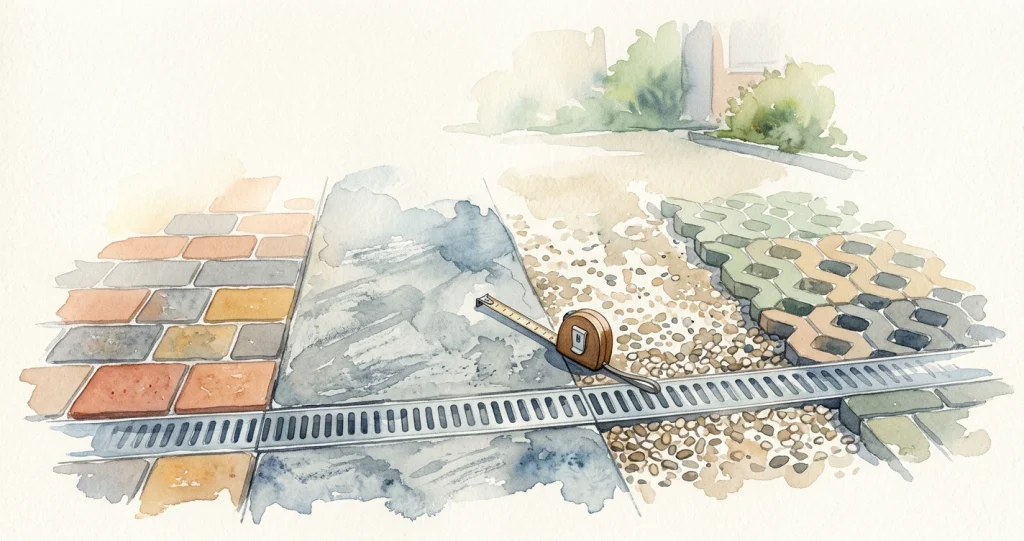
The best surface depends on your budget, how the drive looks against your house, and how much upkeep you are willing to do. Here is how the main options stack up for a typical front garden.
Block Paving
Block paving is the most popular choice for front driveways, and for good reason. Individual blocks lock together to form a strong, flexible surface that handles the weight of cars without cracking. If a block is stained or damaged, you lift it and replace it rather than redoing the whole drive.
Permeable block paving lets water drain through the joints, which keeps you within permitted development in most cases. Expect the most design flexibility here: herringbone, basketweave and contrasting borders all work well. The trade-off is weeds and moss in the joints over time, so an occasional brush and treatment keeps it sharp.
Resin Bound and Raising an Existing Surface
Resin bound surfacing mixes natural aggregate with a clear resin to create a smooth, continuous finish. It is naturally permeable, so it suits front gardens without triggering a planning application. The surface is also comfortable underfoot and resists weeds better than loose materials.
Resin is often laid over an existing solid base, which is a tidy way of raising and refreshing a tired concrete or tarmac drive without a full dig-out. The base must be sound first. If the old surface is cracked or moving, it needs proper repair or replacement before the resin goes down.
Tarmac
Tarmac gives you a clean, uniform black finish at a lower cost than most block paving. It goes down quickly and takes vehicle traffic well, which makes it a practical choice for longer or wider drives.
Standard tarmac is impermeable, so a drive over five square metres will usually need planning permission unless you specify a porous version or route water to a soakaway. Tarmac can soften slightly in very hot weather and may need resealing over the years, but a well-laid surface stays serviceable for a long time.
Concrete
Concrete is hard-wearing and low cost over its life, and it can be finished in several ways. Pattern-imprinted concrete mimics the look of block paving or natural stone while giving you one continuous surface with no joints for weeds.
Like tarmac, standard concrete is impermeable, so plan the drainage early to stay within permitted development. Concrete needs expansion joints to control cracking, and any cracks that do appear are harder to repair invisibly than a single block. Proper ground preparation is what makes a concrete drive last.
Gravel
Gravel is the budget-friendly, permeable option. Water drains straight through, so it rarely needs planning permission, and the crunch underfoot is a genuine security feature. Laid over a stabilising grid, modern gravel stays put far better than the loose stone of old.
The downsides are migration and weeds. Stones travel towards the road and into borders without proper edging, and the surface needs topping up occasionally. For a traditional cottage frontage, though, gravel is hard to beat on cost and character.
Slabs and Natural Stone
Paving slabs and natural stone deliver a premium, elegant finish that lifts the whole frontage. Natural stone such as sandstone or granite ages beautifully and can last for decades with minimal fuss.
Slabs intended for driveways must be rated for vehicle loads, as patio slabs will crack under a car. This is the most expensive route and needs a solid, well-compacted base. Done properly, it is also one of the longest-lasting and most striking choices for a front garden driveway.
How to Choose the Right Surface for Your Home
Start with how you use the space, then match the material to it. A single car on a short drive has very different needs from two cars, a caravan and daily turning. Weigh up four things: budget, drainage, maintenance and the look against your house.
Use this quick comparison to narrow the field:
- Lowest cost and easy drainage: gravel or resin bound.
- Best all-round durability and looks: block paving.
- Large areas on a tighter budget: tarmac or concrete, with drainage planned in.
- Premium finish, long life: natural stone or driveway-rated slabs.
Soil type matters too. Heavy clay, common around parts of Northamptonshire, holds water and affects how a soakaway performs, so the ground preparation underneath is as important as the surface on top. A good contractor assesses the base before quoting, because that hidden layer is what decides whether your drive lasts five years or twenty five. Sound groundworks are the foundation of any driveway, and our groundworks contractor guide explains what proper preparation involves.
Getting the Installation Right
The surface you see is only part of the job. A lasting driveway needs the right depth of sub-base, correct compaction, proper edging to hold everything in place, and falls set so water goes where you planned. Skip any of these and the finish fails early, whatever material you chose.
Ask any contractor how they handle the base, the drainage and the edges before you agree to the work. Clear answers on those three points tell you more than any brochure. If a contractor cannot explain how water will leave the drive, keep looking.
Ready to plan your new front garden driveway? Contact AAS Group for a free, no-obligation quote. We will assess your ground, talk through the surfacing options that suit your home and budget, and lay a drive built to last. #Construction #Northampton
Frequently Asked Questions
Do I need planning permission for a driveway in my front garden?
Not usually. In England, a front garden driveway needs no planning permission if it is permeable or drains to a lawn or border. Permission is only required for an impermeable surface over five square metres that drains to the road, as set out by the Planning Portal.
Which driveway surface lasts the longest?
Natural stone and well-laid block paving are among the longest-lasting options, often serving for decades. Their lifespan depends heavily on the sub-base beneath them. A poorly prepared base will shorten the life of even the best surface, which is why ground preparation matters so much.
What is the cheapest driveway option?
Gravel is typically the most affordable surface to install, and it drains naturally so it rarely needs planning permission. The trade-off is ongoing upkeep: topping up stone and controlling weeds. Resin bound is the next step up for a tidier, lower-maintenance permeable finish.
Can a new driveway add value to my home?
Off-street parking and good kerb appeal are widely regarded by estate agents as desirable features that can help a sale. A tidy, well-drained driveway improves first impressions and daily usability. The exact uplift varies by location and how parking-constrained the area is.
How do I stop my driveway from flooding?
Choose a permeable surface such as gravel, resin bound or permeable block paving, or set the drive to fall towards a planted border or soakaway. This lets rainwater soak away naturally rather than pooling or running into the drains, and it keeps you within permitted development rules.
Planning Your Next Step
The right driveway is the one that matches your soil, your budget and the way you use the front of your house. Walk your frontage, note where water collects after rain, and decide whether permeable surfacing or a soakaway makes most sense for your plot. That single observation often points to the best surface before you compare a price.
When you are ready to turn that into a finished drive, talk to a local team that handles the groundworks and the surfacing together. Call AAS Group in Northampton for a site visit and a straight, itemised quote, and we will help you choose a surface that suits your home for years to come.