
1. Drainage and Flood Prevention
An all-paved garden leaves rainwater with nowhere to go. In the UK, this can lead to severe pooling and damp issues against your home’s foundation. It can also cause conflicts with local drainage planning laws. When considering Hardscaping vs Softscaping in your yard, integrating softscaping—like lawns and deep flowerbeds—allows rainwater to naturally absorb back into the earth. This acts as a natural drainage system.
2. Usable Living Space vs. Serene Privacy
Hardscaping gives you a flat, solid surface to place your outdoor lounge sof
as, dining tables, and fire pits without sinking into the mud. On the other hand, comparing softscaping vs hardscaping is vital for finding the best privacy solutions for your garden. This is because strategic softscaping—like a row of tall pleached trees or dense bamboo—acts as a natural privacy screen. It blocks out neighbouring windows far more elegantly than a standard wooden fence.
3. Low Maintenance vs. High Reward
If you want a zero-maintenance garden, you might be tempted to pave over everything. But hard surfaces fade, gather moss, and require power washing. When planning gardens, striking the right balance with Hardscaping vs Softscaping—using high-quality, durable surfaces and low-maintenance plantings—gives you a garden that looks lush year-round with minimal upkeep.
How to Achieve the Perfect Balance:
3 Design Tips
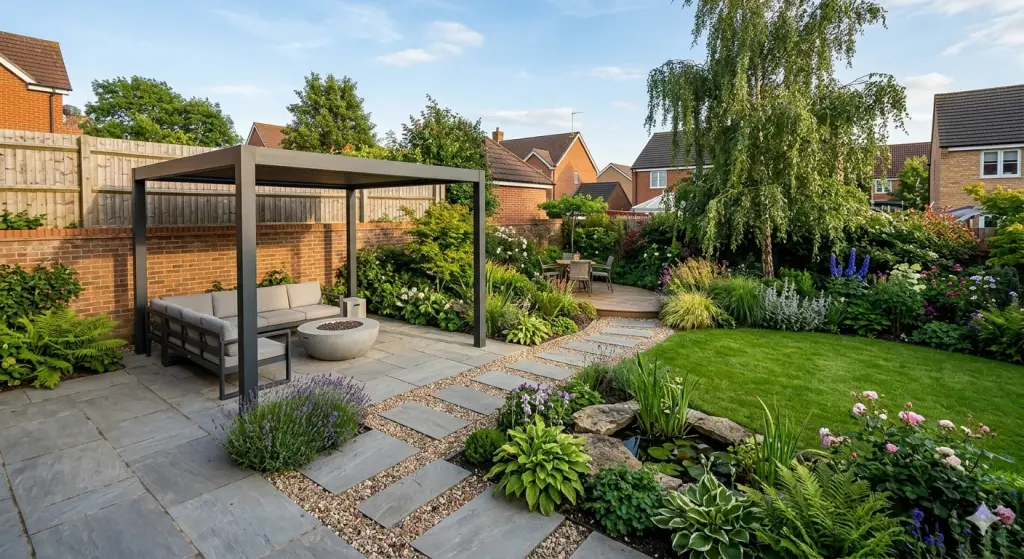
Look at our featured project image above to see these principles in action. Many homeowners seeking balance in their outdoor spaces need to carefully blend Softscaping and Hardscaping techniques for best results.
-
Soften Strong Lines: Notice how the sharp, clean edges of the grey porcelain patio and the modern dark pergola are instantly softened by the overflowing lavender bushes and delicate white hydrangea flowers; mixing softscaping and hardscaping creates visual interest when you consider Hardscaping vs Softscaping strategies.
-
Create Transitions with Stepping Stones: Instead of a solid, heavy concrete path, use large flagstone pavers interspersed with gravel or grass. In Hardscaping vs Softscaping plans, these transitions allow nature and structure to coexist seamlessly by guiding the eye through the garden while allowing nature to break up the stonework.
-
Utilize Vertical Softscaping: If your hardscaped patio is enclosed by a brick retaining wall, don’t leave it bare. Introduce climbing plants like jasmine or wisteria, or build integrated planters right into the wall to elevate your greenery to eye level. This is an example of integrating Softscaping with Hardscaping to enhance outdoor environments, so always consider Hardscaping vs Softscaping in your designs.
Let Us Build Your Dream Outdoor Living Space https://aasgroup.co.uk/
Designing a garden that perfectly balances structural engineering with natural beauty requires an expert eye. Whether a project’s emphasis is on Softscaping or leaning toward Hardscaping—or a dynamic combination of both—our team will guide you through Hardscaping vs Softscaping decisions from start to finish. For example, we manage complex earthworks and retaining structures. In addition, we source premium materials that last a lifetime. Therefore, we handle the hard work. Therefore, you can simply enjoy the results.
Ready to transform your backyard into a luxury retreat? [Contact the AAS Group team today] to discuss our turnkey garden design and site construction services. Our expertise ensures you achieve the best of Hardscaping vs Softscaping benefits for your own outdoor sanctuary.